
For over a decade, the SEO industry operated under a simple premise: acquire more high-quality backlinks than your competitors, and you will dominate search rankings. Businesses invested thousands in link-building campaigns, guest posting networks, and digital PR strategies, all designed to accumulate those coveted external votes of confidence.
In 2026, that playbook no longer guarantees results. Search engines have fundamentally shifted how they evaluate website authority, and backlinks, whilst still relevant, have been eclipsed by a more powerful ranking signal: topical authority.
At Enovatorz, we have witnessed this transformation firsthand through our comprehensive SEO services for e-commerce businesses and digital brands. Websites with modest backlink profiles but exceptional topical depth are consistently outranking established competitors who relied primarily on link acquisition. This paradigm shift demands a strategic recalibration for any business serious about sustainable organic visibility.
This guide explains what topical authority actually means in modern SEO, why search engines now prioritize it over traditional backlink metrics, and how your business can build topic-based authority that drives long-term rankings and qualified traffic.
Understanding Topical Authority: Beyond Surface-Level Definitions
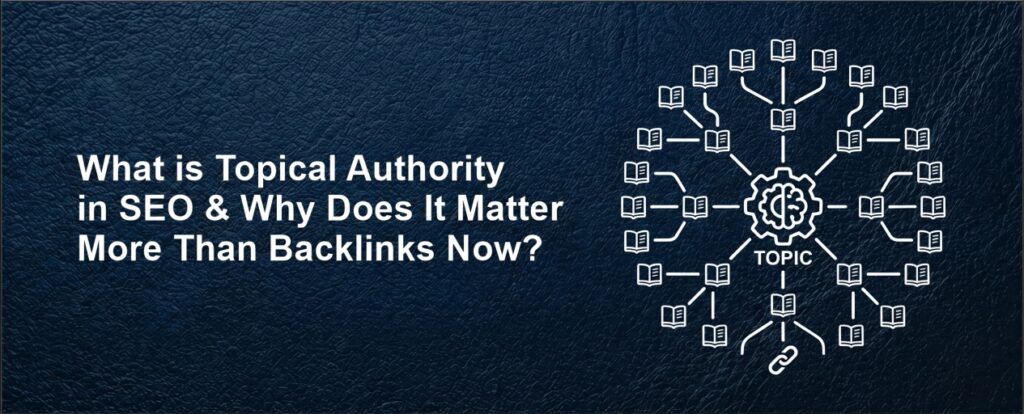
Topical authority represents your website’s perceived expertise and comprehensive coverage of a specific subject area. Rather than measuring how many other sites link to you, it evaluates how thoroughly, accurately, and coherently you address a topic across multiple interconnected pieces of content.
Consider two hypothetical websites competing for rankings in the “sustainable fashion” niche:
- Website A publishes occasional articles about eco-friendly clothing brands, recycled materials, and green fashion trends. Each article exists independently, targeting specific keywords with minimal connection between topics. The site has accumulated 500 backlinks through guest posting and directory submissions.
- Website B has built a comprehensive knowledge ecosystem around sustainable fashion: detailed guides on fabric sustainability, manufacturing processes, supply chain transparency, consumer education, brand evaluations, impact assessments, certification standards, and industry developments. Articles interlink strategically, creating clear pathways from beginner concepts to advanced insights. The site has only 200 backlinks, mostly earned naturally through citations and references.
Google’s own E-E-A-T guidelines confirm that content depth and demonstrated subject knowledge are now core ranking factors.
The Anatomy of Topical Authority
Search engines evaluate topical authority through several interconnected signals:
- Content Depth and Coverage: Does your website address the topic comprehensively across multiple angles, or does it provide shallow, surface-level information? Authority sites answer not just the initial query, but also the follow-up questions users naturally ask as they delve deeper.
- Semantic Relationships: How well do your articles connect related concepts, entities, and subtopics? Strong topical sites demonstrate understanding of how different aspects of a subject interrelate, using consistent terminology and accurate contextual references.
- Internal Link Architecture: Are your pages strategically interconnected to guide users through logical learning pathways, or do they exist in isolation? Topic clusters, where pillar content connects to supporting articles through purposeful internal links, send powerful relevance signals.
- Content Freshness and Maintenance: Do you actively update existing content with new insights, data, and examples, or does information stagnate after publication? Authority decays when accuracy fades, signalling abandonment rather than active expertise.
- User Engagement Patterns: Do visitors explore multiple related pages on your site, indicating they are finding comprehensive value, or do they immediately bounce back to search? Sustained engagement across topic clusters validates authority claims.
The Fundamental Shift: From Link Power to Topic Expertise
The transition from backlink-centric SEO to topical authority reflects search engines’ evolving understanding of relevance and trust. Several technological and behavioural changes drove this transformation.
AI and Semantic Understanding
Modern search algorithms employ sophisticated natural language processing and entity recognition to understand content meaning, not just keyword matching. Google’s BERT, MUM, and subsequent AI implementations analyse how websites explain concepts, answer questions, and demonstrate subject comprehension.
This semantic capability enables search engines to evaluate whether a website genuinely understands a topic or merely mentions relevant terms. Backlinks cannot fake this understanding. Only comprehensive, interconnected content can. Understanding how AI visibility and SEO intersect is essential for any brand navigating today’s search landscape.
The Rise of Zero-Click and AI-Generated Search
As search interfaces evolve, featuring AI Overviews, featured snippets, knowledge panels, and conversational search experiences, the traditional link-based model becomes less central. Search engines now extract information from authoritative sources to answer queries directly, meaning topic coverage matters more than link accumulation.
Link Commoditization and Manipulation
As link building became mainstream, the signal’s reliability decreased. According to Search Engine Land, Google’s ongoing algorithm updates have consistently moved toward rewarding genuine expertise over manipulated link signals.
User Experience as a Ranking Factor
With Core Web Vitals and behaviour metrics increasingly influencing rankings, search engines prioritize content that satisfies user intent completely. Topical authority sites naturally excel at this because users find answers, explore related information, and achieve their goals without needing to leave the domain.
Backlinks alone cannot improve user experience. They can drive initial traffic, but sustained engagement requires substance, which topical authority provides. It is also worth noting that social signals in SEO play a growing supporting role in validating content relevance and user satisfaction.
Why Topical Authority Matters More Than Backlinks Now
The statement “topical authority matters more than backlinks” does not mean links are irrelevant. Rather, it acknowledges that in 2026’s SEO landscape, link power without topical foundation delivers diminishing returns, whilst topical strength with minimal links consistently produces results.
| Factor | Backlink-Focused Strategy | Topical Authority Strategy | 2026 Reality |
| Primary Signal | Number and quality of external links | Depth and coherence of subject coverage | Topic depth now outweighs link quantity |
| Time to Results | Can be fast with aggressive link building | Slower initial build, then compounds rapidly | Authority compounds; links plateau |
| Vulnerability to Updates | High risk during algorithm changes | Resilient across most algorithm shifts | Authority-based sites weather updates better |
| Competitive Moat | Easily replicated with budget | Difficult to replicate without expertise | Authority creates durable advantage |
| User Satisfaction | Links drive traffic but don’t ensure value | Content ecosystem keeps users engaged | Engagement metrics increasingly influence rankings |
| AI Search Compatibility | Links less relevant for AI-generated answers | Content depth critical for AI citations | Topic authorities become AI’s preferred sources |
| Long-Tail Rankings | Limited without supporting content | Naturally ranks for hundreds of related queries | Single authority cluster can rank for 1000+ keywords |
| Investment ROI | High cost, diminishing returns | Lower cost, compounding returns | Content investment scales better |
The Data Supporting This Shift
Recent SEO performance analysis reveals compelling patterns:
- Websites with comprehensive topic clusters (25 to 30 or more interconnected articles on a focused subject) achieve ranking improvements 3x faster than those pursuing link acquisition alone.
- Low domain authority sites (DR 20 to 30) with strong topical coverage consistently outrank higher authority competitors (DR 50 to 70) lacking topic depth.
- Content clusters generate 40 to 60 percent more organic traffic per published article compared to standalone content pieces.
- Topic-focused sites demonstrate 2 to 3x lower bounce rates and 50 percent longer session durations, sending positive engagement signals.
These metrics explain why businesses investing in topical authority see more sustainable, scalable SEO results than those chasing backlinks.
Building Topical Authority: A Strategic Framework
Developing genuine topical authority requires methodical planning and execution, not simply publishing more content. Enovatorz’s SEO services guide businesses through this transformation using a structured approach that balances topic expertise with technical excellence.
Step 1: Define Your Topic Boundaries
Attempting to build authority across broad subjects like “digital marketing” or “e-commerce” dilutes effectiveness. Successful topic authority requires focused expertise.
Identify a specific subject area narrow enough to cover comprehensively but broad enough to support substantial content. For example, rather than “social media marketing,” consider “Instagram marketing for e-commerce brands” or “TikTok growth strategies for small businesses.” Understanding how the Instagram algorithm works in 2026 is one such focused topic that can power an entire topical cluster for lifestyle and retail brands.
Step 2: Map Your Topic Ecosystem
Before creating content, map the complete landscape of your chosen topic covering core concepts, user questions, problem-solution pairs, related subtopics, and industry developments. Tools like Semrush’s Keyword Magic Tool help map topic ecosystems by revealing related queries, search volumes, and keyword clusters your audience is actively searching.
Step 3: Establish Pillar Content
Pillar pages serve as comprehensive introductions to your core topic. These foundational resources:
- Provide broad overviews of the subject
- Address multiple related subtopics at a high level
- Link out to more detailed supporting articles
- Serve as the hub of your topic cluster
For example, if building authority around “Shopify optimization,” your pillar might comprehensively introduce store setup, theme selection, app integration, conversion optimization, and marketing, with each section linking to dedicated in-depth guides.
Step 4: Create Supporting Content Clusters
Supporting articles dive deep into specific subtopics introduced in your pillar content. Each piece should:
- Address a distinct aspect of the broader topic
- Target specific user intent (informational, navigational, transactional)
The goal is not volume for its own sake; it is comprehensive coverage. A well-structured cluster might include 15 to 30 articles, each contributing unique value to the overall topic ecosystem.
Step 5: Implement Strategic Internal Linking
Internal links are not mere SEO tactics in topical authority building; they are the connective tissue that demonstrates subject understanding.
Effective internal linking is contextually relevant, hierarchical, uses natural language anchor text, and allows users to navigate from beginner to advanced content seamlessly. It is also worth understanding how social media indirectly helps SEO, as social amplification of your cluster content builds additional discovery pathways and signals relevance.
Step 6: Maintain and Update Consistently
Topical authority is not achieved through a single content sprint; it is earned through sustained commitment. The most authoritative sites publish new insights as the topic evolves, update existing articles with fresh data and examples, remove or consolidate outdated information, and actively engage with user feedback and questions.
Topical Authority for E-Commerce and Business Websites
Many businesses assume topical authority only applies to informational content sites or blogs. This misconception leaves substantial SEO opportunity untapped. E-commerce sites, service providers, and business websites can all leverage topical authority by connecting educational content with commercial offerings:
- For E-Commerce Stores: Rather than only publishing product pages, create comprehensive guides around product categories, use cases, comparison frameworks, and buying considerations. A Shopify store selling outdoor gear can build authority around hiking, camping, outdoor survival, and adventure travel.
- For Service Businesses: Demonstrate expertise by thoroughly addressing client challenges, industry trends, best practices, and strategic frameworks related to your services.
- For SaaS and Technology Companies: Create extensive knowledge bases, use case libraries, implementation guides, and industry insights that position your solution within broader business contexts
| Business Type | Topic Authority Focus | Content Strategy | Supporting Services |
| E-Commerce | Product categories, use cases, buying guides | Comprehensive guides linking to product collections | SEO optimization, content creation, Shopify management |
| Service Businesses | Client challenges, methodologies, best practices | Service guides, case studies, strategy frameworks | Content marketing, blog writing, SEO services |
| SaaS/Technology | Implementation guidance, use cases, technical education | Knowledge bases, feature guides, ROI calculators | Web development, SEO, content creation |
| Local Businesses | Local industry expertise, service area info | Location-specific guides, local problem-solving | Local SEO, Google My Business, content services |
| B2B Companies | Industry trends, procurement guides, specifications | Whitepapers, industry reports, technical documentation | Content marketing, SEO, LinkedIn marketing |
The Role of Backlinks in a Topical Authority Strategy
Understanding that topical authority now outweighs backlinks does not mean abandoning link building entirely. Rather, it means reframing how links support your overall strategy.
In the modern SEO model, backlinks function as amplifiers, not foundations. A website with shallow topical coverage cannot be rescued by aggressive link acquisition. Conversely, a site with exceptional topic depth benefits disproportionately from even modest quality link growth.
The most effective approach sequences efforts strategically:
- Build topical foundation first: Establish comprehensive subject coverage through well-structured content clusters.
- Earn natural citations: Quality topical content naturally attracts links from journalists, researchers, and industry professionals seeking authoritative sources.
- Strategic outreach second: Once authority exists, targeted link building reinforces existing strength rather than attempting to create it.
Measuring Topical Authority Progress
Unlike domain authority or backlink counts, topical authority lacks a single quantifiable metric. However, progress manifests through several observable indicators:
- Keyword Ranking Velocity: When new articles within your topic cluster rank faster with less promotional effort, your domain authority for that topic is growing.
- Long-Tail Keyword Expansion: Topic-authoritative sites naturally rank for hundreds or thousands of related long-tail queries beyond primary targets.
- SERP Feature Dominance: Increased presence in featured snippets, People Also Ask boxes, and AI Overviews signals search engines view you as a preferred source.
- Engagement Metrics: Higher pages per session, longer average session duration, and lower bounce rates indicate users find comprehensive value.
- Natural Link Acquisition: Earning citations and references without active outreach demonstrates external validation of your expertise.
- Content Efficiency: Achieving strong rankings with fewer total published articles indicates high topical relevance per piece.
At Enovatorz, our comprehensive analytics services track these indicators across client campaigns, providing visibility into topical authority development alongside traditional SEO metrics.
Common Topical Authority Mistakes to Avoid
Building genuine topical authority requires avoiding several pitfalls that undermine effectiveness:
- Topic Drift: Attempting to cover too many unrelated subjects dilutes authority signals. Maintain focused expertise rather than publishing scattered content.
- Shallow Coverage: Creating 50 brief articles does not build authority if none provide substantial depth. Quality always outweighs quantity in topic-based SEO.
- Neglecting Updates: Publishing content then abandoning it signals lack of active expertise. Authority requires ongoing maintenance.
- Weak Internal Linking: Articles that do not connect logically appear as isolated pages rather than components of a knowledge system.
- Ignoring User Intent: Writing for search engines rather than user needs produces content that ranks poorly despite topic relevance.
- Impatience: Topical authority compounds over time. Expecting immediate results leads to premature abandonment of effective strategies.
Further Reading and External Resources
For those looking to deepen their understanding of topical authority and modern SEO principles, these authoritative resources are excellent starting points:
- Moz: The Beginner’s Guide to SEO provides foundational knowledge on how search engines evaluate content authority and relevance.
- Search Engine Journal: Topical Authority in SEO offers in-depth coverage of how topic-based clustering reshapes organic performance.
- Google’s Search Central Blog is the official source for understanding how Google evaluates content quality, expertise, and trustworthiness.
Conclusion: The Future Belongs to Topic Experts
The SEO industry’s evolution from link-centric to topic-centric strategies represents more than tactical adjustment. It reflects fundamental changes in how search engines evaluate trust and deliver value.
In 2026 and beyond, sustainable organic visibility belongs to websites that demonstrate genuine subject expertise through comprehensive, interconnected content ecosystems. Backlinks remain valuable, but they now function as supporting signals that amplify existing authority rather than creating it from nothing
Enovatorz specialises in guiding businesses through this strategic transformation. Our integrated approach combines technical SEO excellence, strategic content development, social media amplification, and comprehensive digital marketing to build sustainable topical authority that drives measurable business outcomes. Whether you are launching a Shopify store, scaling an Amazon business, or establishing thought leadership in your industry, topical authority provides the foundation for long-term organic success
Ready to build topical authority that drives sustainable rankings and qualified traffic? Enovatorz offers comprehensive SEO services, content strategy development, technical optimisation, and digital marketing solutions tailored to your business objectives. Contact us to discover how our expertise transforms topic-focused strategies into measurable results.
Do backlinks still matter in 2026?
Yes, backlinks still matter, but their role has fundamentally changed. In 2026, backlinks function as amplifiers rather than foundations. A site with deep topical expertise gains significantly more from a few quality backlinks than a site with shallow content and hundreds of links. Search engines have become sophisticated enough to detect manufactured link profiles, so organic, earned links from authoritative sources carry far more weight. The best strategy is to build strong topical coverage first, then let quality links reinforce that existing authority.
What are the 3 C's of SEO?
The 3 C's of SEO are Content, Code, and Credibility. Content refers to the relevance, depth, and usefulness of what you publish. Code covers the technical health of your website, including page speed, mobile optimisation, structured data, and crawlability. Credibility encompasses the trust signals your site accumulates, such as backlinks, brand mentions, and author expertise. All three must work together, but in 2026, content depth (tied to topical authority) has become the dominant driver, with credibility increasingly earned through demonstrated expertise rather than link volume alone.
What is the 80/20 rule for SEO?
The 80/20 rule in SEO, also known as the Pareto Principle applied to organic search, suggests that roughly 80 percent of your organic traffic comes from just 20 percent of your content. In practice, this means a small number of well-optimised, high-authority pages within a topical cluster will drive the majority of your results. The strategic implication is to identify your highest-performing topic clusters and invest disproportionately in deepening them rather than spreading effort thinly across unrelated topics. This principle reinforces why building focused topical authority on a few key subjects almost always outperforms publishing broadly with no strategic cohesion. Building a strong Instagram presence, for example, may fall into your top 20 percent if social channels are a key traffic driver for your brand.
