SEO

What is Search Everywhere Optimization and Why Google Alone is No Longer Enough in 2026

Not long ago, a solid Google SEO strategy was enough. Rank well on the first page, drive organic traffic, convert visitors into customers. The formula was straightforward, and for most of the past two decades it worked reliably. That formula is breaking down fast. In 2026, 58.5% of US searches end without a single click to any website. Google’s own AI Overviews answer millions of queries before users even consider visiting a page. Nearly half of consumers under 40 now use TikTok as a search engine. Gen Z users prefer YouTube for how-to queries. Shoppers start product research on Amazon before ever typing into Google. Professionals validate decisions on LinkedIn and Reddit. Your customers are searching everywhere. If you’re only optimising for Google, you’re invisible in the places where an enormous and growing share of your market actually looks for what you offer. This is exactly why Search Everywhere Optimization has become the most important strategic shift in digital marketing in 2026. What Search Everywhere Optimization Actually Means Search Everywhere Optimization, sometimes abbreviated as SEvO, is the practice of making your brand discoverable across every platform where your target audience actively searches, not just traditional search engines. It starts from a simple but profound observation: search behaviour has fragmented. People no longer have one go-to discovery method. A 25-year-old looking for a skincare product might search Instagram for visual recommendations, check TikTok for honest reviews from real people, then visit Amazon to compare prices and read detailed reviews, and only then perhaps conduct a Google search. A B2B buyer evaluating software might start with a Reddit thread, ask ChatGPT for a vendor comparison, read LinkedIn posts from industry voices, and check the company’s YouTube channel for product walkthroughs. At no point in either of those journeys does a traditional search result necessarily appear. If a business is only optimising for Google, it’s absent from most of that discovery process. Search Everywhere Optimization addresses this by building intentional, optimised presence across every platform where your specific audience searches. The key word is intentional. This isn’t about being everywhere indiscriminately. It’s about identifying where your customers genuinely search and building optimised content for each of those surfaces. Why This Shift Has Happened So Quickly Three converging forces have fragmented search behaviour faster in the past two years than in the previous decade combined. AI has changed Google itself. Google’s AI Overviews now answer millions of queries directly on the results page, meaning ranking highly no longer guarantees a click. Understanding what Answer Engine Optimization means and how it differs from traditional SEO is essential context here, because being cited in an AI-generated answer is now as valuable as ranking on page one, sometimes more so. Social platforms have built powerful search functions. According to Adobe’s 2026 Digital Trends Research, nearly half of all consumers use TikTok as a search engine, with 64% of Gen Z preferring it specifically for discovery. Instagram, Pinterest, and YouTube all have search functions that millions of users treat as primary discovery tools. AI assistants have become research partners. ChatGPT, Perplexity, Gemini, and Claude now handle billions of queries monthly. Users ask these tools for vendor recommendations, product comparisons, and expert guidance. How your brand appears in these AI-generated responses, which connects directly to Generative Engine Optimization, determines whether you’re part of the conversation or absent from it entirely. The Platforms That Actually Matter in 2026 Not every platform deserves equal investment. The right mix depends entirely on where your specific customers search. That said, most businesses should be considering these core surfaces. Table 1: Search Everywhere Platform Guide for 2026 Platform Who Searches There Content Format Optimisation Priority Google All demographics, all intents Text, images, video Essential for all businesses TikTok Under 40s, product discovery, how-to, lifestyle Short video High for B2C, growing for B2B YouTube All demographics, tutorials, reviews, education Long and short video High for most industries Amazon Shoppers ready to buy Product pages, A+ content Essential for e-commerce Pinterest Women 25 to 45, visual products, home, fashion, food Images, idea pins High for visual products Reddit Researchers, sceptics, community-driven queries Text discussions Medium for most, high for tech/finance LinkedIn B2B buyers, professionals, service businesses Articles, posts, video High for B2B AI Platforms All demographics, research and comparison queries Cited web content Growing rapidly for all businesses Google: Still Essential But Not Sufficient Google remains the largest search platform and deserves continued investment. Strong topical authority remains the foundation of Google visibility. Building comprehensive, expert content clusters around your core subject area signals authority that Google rewards with rankings. Technical fundamentals still matter too. Schema markup helps Google and other search engines understand your content precisely, improving how you appear in rich results, AI Overviews, and featured snippets. It’s a single technical investment that pays dividends across multiple platforms simultaneously. The key shift is treating Google as one important channel rather than the only channel. Your Google strategy should remain strong whilst you build alongside it. Understanding AI visibility and how brand presence matters in 2026 gives important context for why your Google strategy needs to evolve alongside your Search Everywhere approach. TikTok: The Search Engine Nobody Called a Search Engine TikTok’s transformation from entertainment platform to genuine search engine happened quietly but completely. Users now search TikTok the way they once searched Google, typing queries into the search bar and expecting relevant, trustworthy results. The discovery intent on TikTok differs fundamentally from Google. Someone searching TikTok for a product or service isn’t just looking for information. They’re looking for authentic proof from real people in video format. That’s a different and often higher-converting form of discovery because the content demonstrates experience rather than simply claiming it. This connects directly to E-E-A-T principles, where demonstrated experience now matters as much as stated expertise. A TikTok video showing your product actually working in real conditions demonstrates experience in exactly the way Google’s quality guidelines increasingly reward. Amazon: The Search Engine for Buyers For any business

What is Search Everywhere Optimization and Why Google Alone is No Longer Enough in 2026 Read More »

what is answer aeo

What is Answer Engine Optimization (AEO) and How Does It Differ from SEO in 2026?

When Rachel’s marketing team at a London-based SaaS company noticed their organic traffic drop 23% despite maintaining strong Google rankings, she assumed they’d been hit by an algorithm update. The real reason, her consultant explained, was far more fundamental: their competitors weren’t just outranking them anymore. They were being cited directly in AI-generated answers whilst Rachel’s perfectly optimized pages were becoming invisible. “We’d spent years mastering traditional SEO,” Rachel recalls. “Ten blue links, keyword research, backlink acquisition, the whole playbook. Then ChatGPT started recommending our competitors by name whilst our brand never appeared. We were ranking on page one of Google but completely absent from where our customers were actually searching.” If you’ve invested heavily in SEO but noticed qualified traffic declining, or if you’re seeing competitors gain visibility in ways traditional rankings don’t explain, you’re experiencing the most significant shift in search behavior since Google’s launch. Welcome to the era of Answer Engine Optimization. This isn’t about replacing SEO. It’s about understanding that the game has fundamentally changed, and winning now requires strategies that extend far beyond traditional search engine rankings. What is Answer Engine Optimization? Answer Engine Optimization, or AEO, is the practice of structuring your content so AI-powered platforms can easily find, understand, extract, and cite it when generating direct answers to user queries. Where traditional SEO optimizes content to rank in search results pages, AEO optimizes content to become the answer itself—the text that ChatGPT quotes, the source that Perplexity cites, the information that Google’s AI Overviews synthesize, or the recommendation that Claude provides. The distinction is critical. When someone searches “best CRM software for small businesses” on Google in the traditional sense, they receive ten ranked results and choose which pages to visit. When they ask ChatGPT or Perplexity the same question, they receive a synthesized answer that might mention three to five specific products by name, with supporting context explaining why each fits different needs. If your product isn’t cited in that answer, you’re invisible to that user—regardless of whether you rank number one in traditional search results. The Data Behind the AEO Shift Before exploring implementation strategies, understanding the scale and pace of this transition is essential for resource allocation decisions. Zero-click searches now dominate: Approximately 60% of Google searches end without any click to a website. Users get their answer directly from featured snippets, knowledge panels, or AI Overviews, making traditional traffic metrics increasingly incomplete measures of visibility. AI search adoption has reached critical mass: ChatGPT processes over 2 billion queries daily, Google AI Overviews reaches nearly 2 billion users across 200+ countries, and Perplexity handles more than 1.2 billion monthly queries. These aren’t future projections. These are current-day realities. Traditional search volume is declining: Gartner projects that traditional search engine volume will drop 25% by the end of 2026 as users increasingly prefer AI-powered answers over manually scanning search results. AI referral traffic is exploding: Adobe Analytics found that AI-referred traffic to retail websites grew 1,200% between 2023 and 2025, whilst Ahrefs documented a 58% reduction in clicks to the top-ranking page when AI Overviews appear. These numbers reveal more than a trend. They document a structural transformation in how people discover information, evaluate options, and make purchasing decisions. How AEO Fundamentally Differs from Traditional SEO Understanding the mechanical differences between AEO and SEO illuminates why optimization strategies must evolve rather than simply expand. Aspect Traditional SEO Answer Engine Optimization (AEO) Primary Goal Rank higher in search results pages Get cited in AI-generated answers Target System Search engine ranking algorithms AI/LLM retrieval and synthesis systems Content Format Keyword-optimized pages with depth Direct, extractable, conversational answers Success Metrics Rankings, clicks, organic traffic, dwell time AI citations, brand mentions, Share of Answer Query Type Focus Short-tail and mid-tail keywords Long-tail, conversational, question-based queries User Journey User clicks → reads page → takes action AI summarizes → user evaluates → seeks source if needed Optimization Priority Page authority, backlinks, technical SEO Content clarity, entity recognition, structured data Measurement Google Search Console, rank tracking AI visibility tools, citation monitoring Content Structure Comprehensive depth across full page Section-level extractability, independent answers E-E-A-T Application Demonstrated through full page experience Must be machine-readable and citable The Core Strategic Difference Traditional SEO asks: “How do we rank on the results page?” AEO asks: “How do we become part of the answer?” This isn’t semantic wordplay. It represents a fundamental shift in optimization objectives. When your content ranks highly but an AI system summarizes your competitor’s information instead, you’ve won the SEO battle but lost the AEO war—and increasingly, that’s the war that determines which brands customers discover, evaluate, and ultimately choose. Why Answer Engine Optimization Matters Now The urgency around AEO implementation stems from three converging realities that make early adoption strategically valuable. AI is Already Changing Discovery Behavior Research from HubSpot reveals that 73% of consumers who use generative AI for shopping consider it their primary product research source. These users aren’t starting their journey on Google and then maybe visiting ChatGPT later. They’re beginning and often ending their research within AI interfaces. For businesses, this creates a stark reality: if you’re not visible within AI answer environments, you’re not visible to a rapidly growing segment of your addressable market. This isn’t a distant future scenario requiring preparation. It’s a current condition demanding immediate response. The Citation Economy Rewards First Movers Unlike traditional SEO where rankings fluctuate constantly, AI citation patterns tend to stabilize around sources that demonstrate consistent authority. When ChatGPT or Perplexity consistently cites a particular brand as the answer for certain queries, that citation history reinforces future selection. Early AEO investment creates compounding advantages. The sources that AI systems learn to trust for specific topics become increasingly difficult for competitors to displace, creating citation-based moats similar to how topical authority compounds in traditional search. Traditional SEO Metrics Are Becoming Incomplete If your analytics show declining traffic despite stable rankings, you’re experiencing the visibility gap between where you rank and where users actually look for

What is Answer Engine Optimization (AEO) and How Does It Differ from SEO in 2026? Read More »

What Is GEO (Generative Engine Optimization)? The Complete 2026 Guide

GEO, or Generative Engine Optimization, is the practice of structuring and optimizing your content so that AI-powered platforms like ChatGPT, Google AI Overviews, Perplexity, and Gemini cite, reference, or recommend your brand when generating answers to user questions. While traditional SEO focuses on ranking in a list of search results, GEO focuses on being selected as the source inside the AI-generated answer itself. In 2026, this distinction has become one of the most important shifts in digital marketing, and brands that ignore it are becoming invisible to a rapidly growing share of their audience.   What Is GEO and Why Does It Exist? To understand why GEO exists, you need to understand what has changed about how people search for information online. For two decades, the search experience was relatively simple: a user typed a query into Google, received a list of ten blue links, clicked one, and read the content. SEO existed to help brands compete for the highest positions in that list. The more visible your link, the more clicks you received. It was a ranking game. That model has fundamentally changed. When someone asks ChatGPT a question today, they do not receive ten links to choose from. They receive a single synthesized answer written by the AI itself, often accompanied by just two or three cited sources. When they use Google AI Overviews, they see a generated summary at the very top of the page, above all the traditional blue links. When they use Perplexity, they interact with a conversational interface that pulls from multiple sources and presents a unified answer. In each of these scenarios, getting clicked on is no longer the goal. Getting cited as the source the AI draws from is the goal. That is what Generative Engine Optimization is designed to achieve. The term GEO was formalized in academic research published by Princeton, Georgia Tech, and IIT Delhi in 2024. That foundational paper demonstrated that specific content characteristics significantly increased the probability of a piece of content being cited by generative AI systems. By 2025, GEO had entered mainstream marketing vocabulary. By early 2026, most enterprise marketing teams have a dedicated GEO initiative, while most small and medium-sized businesses have not yet started, which represents a meaningful first-mover opportunity for those who act now. GEO vs SEO: What Is the Difference? The simplest way to explain the difference is this: SEO gets your content found. GEO gets your content trusted enough to become the answer. Traditional SEO optimizes for ranking positions in a list of search results on Google or Bing. Success in SEO is measured by your position on the page, your click-through rate, and the organic traffic that results. The algorithm considers hundreds of factors including backlinks, page speed, content relevance, and user engagement signals. You win by appearing higher in the list than your competitors and by writing a title and meta description compelling enough to earn a click. GEO operates on entirely different mechanics. AI engines do not display ranked lists. They synthesize answers from multiple sources and present a single, coherent response. When your content contributes to that response, it is often cited with a brief reference or link, but the user has already consumed your information inside the AI’s answer before they ever make the decision to visit your site. Success in GEO is measured by citation frequency, share of voice within AI-generated responses, and brand mentions across AI platforms. To fully understand what signals build the credibility that earns those citations, it helps to read about E-E-A-T in SEO, because AI engines heavily favor content that demonstrates genuine experience, expertise, authoritativeness, and trustworthiness. Critically, GEO does not replace SEO. A strong SEO foundation is actually a prerequisite for effective GEO. Platforms like Perplexity and Google AI Overviews frequently pull their cited sources from pages that already rank well in traditional search. If your content is not indexed, crawlable, and reasonably authoritative in the traditional SEO sense, AI engines are unlikely to encounter it at all. Think of GEO as an additional layer built on top of your existing SEO foundation, not a replacement for it. The two strategies are complementary, and the most effective digital marketing teams in 2026 are running both simultaneously. Why GEO Matters More Than Ever in 2026 The numbers behind GEO’s importance are not subtle, and understanding them puts the urgency into perspective. According to Gartner research cited across multiple 2026 industry reports, traditional search engine volume is projected to drop by 25% by the end of this year as users shift to AI chatbots and virtual agents for their information needs. Google AI Overviews now reach more than 1.5 billion monthly users and appear on approximately 15 to 20% of all Google searches. ChatGPT surpassed 800 million weekly active users by late 2025. Perplexity processes hundreds of millions of queries every month. These are not niche platforms being tested by early adopters — they are mainstream information tools used by a significant portion of your potential customers every single day. Perhaps most importantly, nearly 47% of brands currently have no GEO strategy at all. That gap represents a significant first-mover advantage for brands that start now, before the competitive landscape in AI search becomes as saturated as traditional SEO has. And if you are wondering how existing SEO signals feed into this picture, understanding what social signals are in SEO is a useful foundation, because the engagement and authority patterns they create are part of what AI engines read when evaluating which sources to trust. How AI Engines Decide What to Cite Understanding what drives AI citation decisions is the foundation of any effective GEO strategy. AI engines are not random in their source selection. They follow consistent patterns that are becoming increasingly well understood through research and observation. Statistical specificity is another powerful citation driver. Research from the foundational Princeton GEO study showed that including specific statistics in content increases the probability of being cited by AI systems by approximately 37%. A claim like

What Is GEO (Generative Engine Optimization)? The Complete 2026 Guide Read More »

What is Schema Markup

What is Schema Markup and How Does It Help Your Website Stand Out in Google Results?

You’ve probably noticed that some search results on Google look way more attractive than others. Some listings show star ratings, recipe cooking times, business hours, prices, or those handy FAQ accordions that expand right there in the search results. Meanwhile, others just show the boring blue title and meta description. The difference? Schema markup. If you’re running a business website and not using schema markup yet, you’re essentially showing up to a job interview in jeans whilst everyone else is wearing suits. Your content might be brilliant, but you’re not presenting it in a way that catches anyone’s eye. What Exactly Is Schema Markup? Think of schema markup as a translator between your website and search engines. Your website speaks English, but search engines prefer a more structured language they can process quickly and accurately. Schema markup is a special code you add to your web pages that tells search engines, “This is a product. This number here is the price. That star rating is from customer reviews.” Without schema, Google has to guess what everything means. With schema, you’re giving Google a detailed roadmap. The technical term is “structured data,” and it uses vocabulary from Schema.org—a collaborative project created by Google, Microsoft, Yahoo, and Yandex in 2011. Think of it as a universal language that all major search engines understand. Here’s a simple example. You run a bakery with a page about chocolate cake. A human reading your page immediately understands: “This chocolate cake costs £12, serves 8 people, and has a 4.5-star rating.” But to a search engine, that’s just text. With schema markup, you explicitly label each piece: “price: 12 GBP,” “servingSize: 8,” “ratingValue: 4.5.” Now Google knows exactly what each element means and can display it beautifully in search results. Why Schema Markup Matters More in 2026 Five years ago, schema markup was one of those “nice to have” SEO tactics that technical folks talked about but most businesses ignored. In 2026, that’s changed completely. The Rise of AI-Powered Search: Google’s AI Overviews, ChatGPT, Perplexity, and other AI tools rely heavily on structured data to understand and cite content. When these systems scan billions of web pages looking for authoritative sources, they prioritize content with clear schema markup because it’s easier to verify. If your content lacks schema, AI systems might simply skip over it. The Decline of Traditional Clicks: About 60% of Google searches now end without anyone clicking through to a website. People get answers directly from rich results, featured snippets, and AI summaries. If you’re not appearing in these enhanced features—powered by schema markup—you’re missing massive visibility. Studies show that pages with schema markup enjoy 20-30% higher click-through rates compared to standard listings. And for local businesses, proper schema can mean the difference between appearing in the local 3-pack or being buried on page two. The Types of Schema That Actually Matter Schema.org defines over 800 different schema types, which sounds overwhelming. The good news? Most businesses only need five or six core types. Schema Type Best For What It Does Example Rich Result Organization Every business Defines brand identity, logo, contact info, social profiles Knowledge panel, branded results LocalBusiness Physical locations Shows address, hours, phone, service area Local pack, Maps listings Product E-commerce stores Displays price, availability, ratings, reviews Product cards with pricing/stars Article/BlogPosting Content publishers Identifies author, publish date, headline Enhanced article snippets FAQPage Service businesses Creates expandable FAQ sections in results Accordion-style FAQ panels BreadcrumbList All websites Shows site hierarchy in search results Clean breadcrumb trails If you run an e-commerce store, you’d want Product schema on product pages, Organization schema on your homepage, and Article schema on blog posts. That’s it. For service businesses, LocalBusiness and Organization schema should be priorities, alongside FAQ schema if you’re targeting question-based queries. How Schema Markup Helps You Stand Out Star Ratings and Reviews: When someone searches for “best running shoes,” results with star ratings immediately grab attention. That’s Product schema working. Even ranking in position 3 or 4, those gold stars draw eyes and steal clicks from higher competitors without visible reviews. Rich Snippets for Recipes and How-Tos: If you publish recipes or instructions, schema triggers rich results showing cooking time, calories, and step-by-step images. Users see valuable information without leaving Google, but if they want the full recipe, they click through. FAQ Accordions: This is brilliant because FAQ rich results take up massive screen real estate, pushing competitors down. They establish you as the authority. When users need more detailed information, guess whose site they visit? Yours. The relationship between E-E-A-T signals in SEO and schema markup is interesting. Schema helps make your expertise and trustworthiness machine-readable. Person schema on author profiles with LinkedIn links transforms a byline into a verifiable entity AI systems can trust. The Connection Between Schema and AI Search When ChatGPT, Perplexity, or Google’s AI Overviews scan content to generate answers, they’re not reading your paragraphs like humans. They’re looking for structured, machine-readable signals that verify facts and establish credibility. Schema markup provides exactly that. If your Article schema clearly identifies the author (Person entity) and publisher (Organization entity), AI systems can validate your content’s trustworthiness far more easily. Sites with comprehensive schema implementations are getting cited in AI-generated answers at significantly higher rates than those without. As AI-powered search grows, this advantage compounds. JSON-LD: The Only Format Worth Using You might hear about different schema formats: Microdata, RDFa, JSON-LD. Let me save you research time: use JSON-LD exclusively. Google explicitly recommends JSON-LD because: It’s separate from HTML, so it doesn’t affect page layout It’s easier for developers to implement and maintain It’s less prone to errors than inline formats It’s the only format recommended for new implementations in 2026 Common Schema Mistakes That Kill Rich Results I’ve audited dozens of websites for clients at Enovatorz, and I see the same mistakes repeatedly: Schema-Content Mismatch: Your schema must accurately reflect what’s visible. If schema claims 500 reviews but only 50 are visible, Google will penalize you.

What is Schema Markup and How Does It Help Your Website Stand Out in Google Results? Read More »

What Is E-E-A-T in SEO and How Does Google Use It to Rank Your Website?

If you have been publishing content consistently, ticking all the technical SEO boxes, and still struggling to rank where you think you should, there is a good chance E-E-A-T is the missing piece of the puzzle. It is one of the most talked-about concepts in SEO right now, and also one of the most misunderstood. This guide cuts through the noise and gives you a practical, honest explanation of what E-E-A-T actually is, why Google cares about it, and what you can do to improve it for your website. So what exactly is E-E-A-T? E-E-A-T stands for Experience, Expertise, Authoritativeness, and Trustworthiness. It is a framework from Google’s Search Quality Rater Guidelines, a document that Google’s human reviewers use to evaluate the quality of search results. These reviewers, called Quality Raters, assess whether the pages appearing in search results are genuinely helpful, credible, and safe for users. The concept started life as E-A-T back in 2018 before Google added the first “E” for Experience in December 2022. That addition was significant. It signaled that Google does not just want content from people who know a topic in theory. It wants content from people who have actually lived or worked through it firsthand. The difference between someone writing about a hiking trail they have never walked versus someone who hiked it last summer is exactly what that extra E is designed to capture. Google is explicit that Trust sits at the centre of these four elements. As their guidelines state: “Trust is the most important member of the E-E-A-T family because untrustworthy pages have low E-E-A-T no matter how Experienced, Expert, or Authoritative they may seem.” That sentence alone tells you a lot about where to focus your energy. A brief history of how we got here Aug 2018: Google’s “Medic Update” shook the health and wellness sector, making E-A-T a household term for SEO professionals. Websites lacking credibility signals lost significant rankings overnight.   Dec 2022 : Google added the first “E” for Experience to create E-E-A-T, recognizing that firsthand knowledge adds a layer of credibility no amount of research can fully replicate. Feb 2023: The Product Reviews Update rewarded content from people with genuine hands-on experience, directly punishing thin reviews written without real product contact. Aug 2023: The August Core Update reinforced E-E-A-T signals across all content categories, not just YMYL topics. Sep 2023: The Helpful Content Update pushed people-first content to the forefront, explicitly targeting content written for search engines rather than human readers. Mar 2024: Google’s Core Update resulted in mass deindexing of low-quality, largely AI-generated sites — a clear signal that E-E-A-T enforcement was intensifying. Is E-E-A-T actually a ranking factor? This is the question that generates more debate in SEO communities than almost any other. The honest answer is: not directly, but practically it absolutely matters. Google has never listed E-E-A-T as a confirmed algorithmic ranking signal in the way that backlinks or page speed are. What it is, is a set of guidelines that human Quality Raters use to assess search results. Their assessments then feed back into how Google refines its algorithm over time. So E-E-A-T does not flip a switch in the ranking system, but it shapes the direction of the very algorithm that does the ranking. Think of it this way. Google’s stated goal is to surface the most helpful, credible content for any search query. E-E-A-T defines what “credible and helpful” looks like. If you consistently produce content that meets those criteria, you are aligning with what Google is trying to reward, and your rankings reflect that over time. The practical reality: Websites that demonstrate strong E-E-A-T consistently earn better backlinks, longer time-on-page, lower bounce rates, and more return visits. All of those are measurable signals that do directly influence rankings. So even if E-E-A-T is not a ranking factor in the strict technical sense, its downstream effects most certainly are. YMYL: why some industries feel E-E-A-T pressure more than others E-E-A-T matters across all content categories, but Google applies it most rigorously to what it calls YMYL topics: Your Money or Your Life. These are topics where inaccurate or misleading information could have serious real-world consequences for the people reading it. YMYL categories include medical and health information, financial and legal advice, safety guidance, government and civic information, and e-commerce transactions involving sensitive products. If your website operates in any of these spaces, the bar for demonstrating E-E-A-T is significantly higher than for a lifestyle blog or a hobby website. John Mueller, Google’s Search Advocate, has been direct about this: content in high-stakes categories needs to come from people who genuinely understand what they are doing. A run-of-the-mill website with no clear expertise or accountability simply will not cut it for YMYL queries, regardless of how well it is technically optimised. Breaking down each element with practical examples Experience: have you actually done this? Experience is the newest addition and in many ways the most interesting. Google’s Quality Rater Guidelines specifically ask reviewers to consider whether the content creator has the necessary firsthand or life experience for the topic. A product review carries far more weight when the reviewer has actually used the product. A travel guide means more when the writer has walked those streets themselves. For businesses and content creators, demonstrating experience looks like including original photographs rather than stock images, sharing specific details that only come from direct involvement, writing case studies grounded in real client work, and including personal anecdotes that add texture to the information. These are signals that a human being with genuine knowledge produced the content, not someone regurgitating information they found elsewhere. Expertise: depth over breadth Expertise is about how deep your knowledge goes, not how wide. Google does not expect every website to be staffed by professors and credentialed professionals, but it does expect content on any given topic to reflect genuine mastery of that subject area. A quilting blogger who has spent a decade perfecting her craft demonstrates expertise

What Is E-E-A-T in SEO and How Does Google Use It to Rank Your Website? Read More »

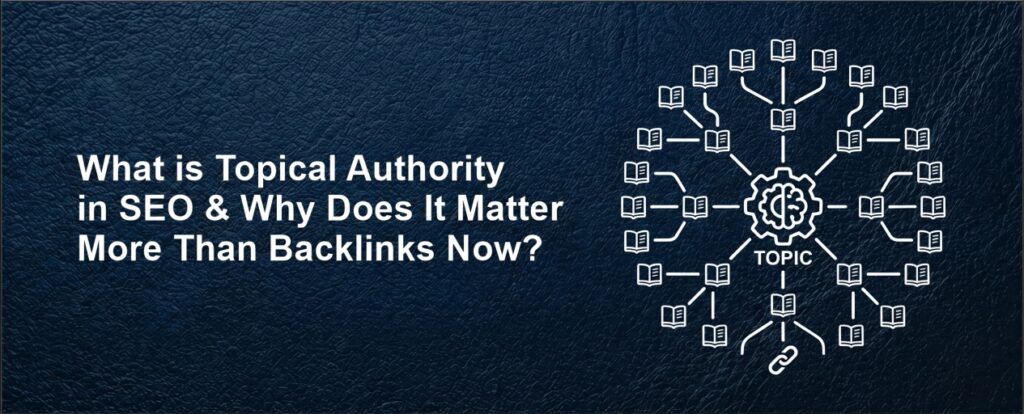
What is Topical Authority in SEO and Why Does It Matter More Than Backlinks Now?

For over a decade, the SEO industry operated under a simple premise: acquire more high-quality backlinks than your competitors, and you will dominate search rankings. Businesses invested thousands in link-building campaigns, guest posting networks, and digital PR strategies, all designed to accumulate those coveted external votes of confidence. In 2026, that playbook no longer guarantees results. Search engines have fundamentally shifted how they evaluate website authority, and backlinks, whilst still relevant, have been eclipsed by a more powerful ranking signal: topical authority. At Enovatorz, we have witnessed this transformation firsthand through our comprehensive SEO services for e-commerce businesses and digital brands. Websites with modest backlink profiles but exceptional topical depth are consistently outranking established competitors who relied primarily on link acquisition. This paradigm shift demands a strategic recalibration for any business serious about sustainable organic visibility. This guide explains what topical authority actually means in modern SEO, why search engines now prioritize it over traditional backlink metrics, and how your business can build topic-based authority that drives long-term rankings and qualified traffic.   Understanding Topical Authority: Beyond Surface-Level Definitions Topical authority represents your website’s perceived expertise and comprehensive coverage of a specific subject area. Rather than measuring how many other sites link to you, it evaluates how thoroughly, accurately, and coherently you address a topic across multiple interconnected pieces of content. Consider two hypothetical websites competing for rankings in the “sustainable fashion” niche: Website A publishes occasional articles about eco-friendly clothing brands, recycled materials, and green fashion trends. Each article exists independently, targeting specific keywords with minimal connection between topics. The site has accumulated 500 backlinks through guest posting and directory submissions. Website B has built a comprehensive knowledge ecosystem around sustainable fashion: detailed guides on fabric sustainability, manufacturing processes, supply chain transparency, consumer education, brand evaluations, impact assessments, certification standards, and industry developments. Articles interlink strategically, creating clear pathways from beginner concepts to advanced insights. The site has only 200 backlinks, mostly earned naturally through citations and references. Google’s own E-E-A-T guidelines confirm that content depth and demonstrated subject knowledge are now core ranking factors.   The Anatomy of Topical Authority Search engines evaluate topical authority through several interconnected signals: Content Depth and Coverage: Does your website address the topic comprehensively across multiple angles, or does it provide shallow, surface-level information? Authority sites answer not just the initial query, but also the follow-up questions users naturally ask as they delve deeper. Semantic Relationships: How well do your articles connect related concepts, entities, and subtopics? Strong topical sites demonstrate understanding of how different aspects of a subject interrelate, using consistent terminology and accurate contextual references. Internal Link Architecture: Are your pages strategically interconnected to guide users through logical learning pathways, or do they exist in isolation? Topic clusters, where pillar content connects to supporting articles through purposeful internal links, send powerful relevance signals. Content Freshness and Maintenance: Do you actively update existing content with new insights, data, and examples, or does information stagnate after publication? Authority decays when accuracy fades, signalling abandonment rather than active expertise. User Engagement Patterns: Do visitors explore multiple related pages on your site, indicating they are finding comprehensive value, or do they immediately bounce back to search? Sustained engagement across topic clusters validates authority claims.   The Fundamental Shift: From Link Power to Topic Expertise The transition from backlink-centric SEO to topical authority reflects search engines’ evolving understanding of relevance and trust. Several technological and behavioural changes drove this transformation. AI and Semantic Understanding Modern search algorithms employ sophisticated natural language processing and entity recognition to understand content meaning, not just keyword matching. Google’s BERT, MUM, and subsequent AI implementations analyse how websites explain concepts, answer questions, and demonstrate subject comprehension. This semantic capability enables search engines to evaluate whether a website genuinely understands a topic or merely mentions relevant terms. Backlinks cannot fake this understanding. Only comprehensive, interconnected content can. Understanding how AI visibility and SEO intersect is essential for any brand navigating today’s search landscape. The Rise of Zero-Click and AI-Generated Search As search interfaces evolve, featuring AI Overviews, featured snippets, knowledge panels, and conversational search experiences, the traditional link-based model becomes less central. Search engines now extract information from authoritative sources to answer queries directly, meaning topic coverage matters more than link accumulation. Link Commoditization and Manipulation As link building became mainstream, the signal’s reliability decreased. According to Search Engine Land, Google’s ongoing algorithm updates have consistently moved toward rewarding genuine expertise over manipulated link signals. User Experience as a Ranking Factor With Core Web Vitals and behaviour metrics increasingly influencing rankings, search engines prioritize content that satisfies user intent completely. Topical authority sites naturally excel at this because users find answers, explore related information, and achieve their goals without needing to leave the domain. Backlinks alone cannot improve user experience. They can drive initial traffic, but sustained engagement requires substance, which topical authority provides. It is also worth noting that social signals in SEO play a growing supporting role in validating content relevance and user satisfaction.   Why Topical Authority Matters More Than Backlinks Now The statement “topical authority matters more than backlinks” does not mean links are irrelevant. Rather, it acknowledges that in 2026’s SEO landscape, link power without topical foundation delivers diminishing returns, whilst topical strength with minimal links consistently produces results. Factor Backlink-Focused Strategy Topical Authority Strategy 2026 Reality Primary Signal Number and quality of external links Depth and coherence of subject coverage Topic depth now outweighs link quantity Time to Results Can be fast with aggressive link building Slower initial build, then compounds rapidly Authority compounds; links plateau Vulnerability to Updates High risk during algorithm changes Resilient across most algorithm shifts Authority-based sites weather updates better Competitive Moat Easily replicated with budget Difficult to replicate without expertise Authority creates durable advantage User Satisfaction Links drive traffic but don’t ensure value Content ecosystem keeps users engaged Engagement metrics increasingly influence rankings AI Search Compatibility Links less relevant for AI-generated answers Content depth critical for AI citations Topic authorities become

What is Topical Authority in SEO and Why Does It Matter More Than Backlinks Now? Read More »

How Social Media Indirectly Helps SEO for E-Commerce Brands

While Google maintains that social signals don’t directly impact search rankings, the indirect connection between social media and SEO has become increasingly crucial for e-commerce success in 2026. For businesses selling through Shopify, Amazon, eBay, or independent online stores, understanding this relationship isn’t just beneficial it’s essential for sustainable growth. At Enovatorz, we’ve witnessed firsthand how strategic social media management amplifies SEO performance for e-commerce clients. Our integrated approach combines platform-specific optimization across Instagram, Facebook, Pinterest, and TikTok with technical SEO expertise, creating synergies that drive measurable traffic and revenue increases. This article explores the proven mechanisms through which social media strengthens your e-commerce SEO. The Core Connection: Social Media as a Discovery Engine Consumer search behavior has fundamentally shifted. According to recent studies, social media has become the number one channel for product discovery across all age groups, with over 73% of Gen Z users relying on platforms like TikTok and Instagram for product research before ever opening Google. This behavioral transformation means e-commerce brands can no longer treat social media and SEO as separate strategies. Platforms like TikTok, YouTube, Instagram, and Pinterest now function as standalone search engines where users actively seek product recommendations, reviews, and purchasing decisions. When your content ranks well within these platforms’ search functions, you create additional pathways for customers to discover your products—pathways that eventually lead back to Google searches for your brand name or products. Five Powerful Ways Social Media Boosts E-Commerce SEO 1. Amplified Content Reach Drives Backlink Opportunities Quality backlinks remain among Google’s most significant ranking factors. Social media dramatically increases the likelihood that your content will earn these valuable links. When you share blog posts, product guides, or educational content through social channels, you expose this material to wider audiences including journalists, bloggers, and industry influencers who may link to your content. Industry trend reports and market analysis Educational content addressing customer pain points Behind-the-scenes content showcasing product development Each share, repost, and engagement creates opportunities for natural link acquisition. A single viral social post can generate dozens of backlinks as content creators reference your material, directly strengthening your domain authority. 2. Brand Search Volume Growth Signals Authority One of social media’s most undervalued SEO contributions is its ability to increase branded search volume—searches specifically for your company name, products, or unique offerings. When customers discover your brand through Instagram or TikTok and subsequently search for you on Google, search engines interpret this branded search demand as a strong authority signal. Google’s algorithms prioritize brands that demonstrate consistent search interest. Strong branded search volumes lead to: Better rankings for both branded and non-branded commercial keywords Increased likelihood of earning featured snippets and knowledge panels Improved visibility in AI-powered search features and overviews Greater competitive protection against marketplace competitors Enovatorz helps e-commerce businesses develop cohesive brand identities across social platforms that drive memorable customer experiences. Our content creation services design distinctive social media posts, banners, and visual assets that reinforce brand recognition, translating social impressions into valuable search queries that boost your SEO performance. 3. Traffic Quality Influences User Engagement Metrics While Google doesn’t explicitly confirm using engagement metrics like bounce rate or time-on-site as ranking factors, the correlation between user engagement and search visibility is well-documented. Social media drives qualified traffic to your e-commerce site—visitors who arrive with genuine interest in your products based on content they’ve already engaged with. When these social visitors: Spend significant time browsing product pages View multiple product categories These positive engagement patterns signal content quality and relevance to search algorithms, indirectly supporting improved rankings for your product and category pages. Platform Best Content Type Average Session Duration Purchase Intent SEO Benefit Instagram Product showcases, lifestyle content 2-4 minutes Medium-High Brand searches, profile visibility in SERPs TikTok Product demos, trending content 3-5 minutes Medium Viral potential, Google SERP placement Pinterest Product pins, how-to guides 4-7 minutes Very High High-quality referral traffic, image search rankings YouTube Reviews, tutorials, unboxings 8-15 minutes High Featured video snippets, long-term traffic Facebook Community engagement, customer service 2-3 minutes Medium Local SEO, business profile visibility 4. User-Generated Content Creates Fresh, Indexable Material Customer-created content reviews, unboxing videos, styling photos, testimonials represents one of e-commerce’s most valuable yet underutilized SEO assets. When customers share content featuring your products on social platforms, they create authentic material that: Encouraging and resharing user-generated content amplifies these benefits while strengthening community engagement a virtuous cycle that serves both social media growth and SEO objectives. 5. Social Proof Strengthens Brand Credibility E-commerce success relies heavily on consumer trust, particularly for newer or smaller brands competing against established marketplace giants. Social media serves as a primary trust-building channel where potential customers evaluate brand authenticity, customer service quality, and product value before making purchases. Enovatorz provides comprehensive e-commerce solutions that integrate social media management with Amazon store optimization, eBay management, and Shopify development. Our holistic approach ensures every customer touchpoint from social discovery to marketplace listings to your branded website delivers consistent, trust-building experiences that convert browsers into buyers. Measuring Social Media’s SEO Impact Quantifying social media’s contribution to SEO requires tracking specific metrics across both channels: Social Media Indicators: Referral traffic volume from each platform Engagement rates by content type Share velocity for website content Profile visits and link clicks Follower growth rate SEO Performance Markers: Branded search volume trends Backlink acquisition rate Rankings for target product keywords Combined Metrics: Correlation between social campaigns and traffic spikes Conversion rate comparison: social vs. organic visitors Time lag between social activity and ranking improvements Customer lifetime value by acquisition channel At Enovatorz, our analytics framework tracks performance across all digital marketing channels social media, SEO, Google Ads, Meta advertising, and e-commerce platform metrics. This comprehensive visibility enables us to identify which social activities drive the strongest SEO benefits, allowing continuous optimization toward measurable business outcomes. Implementation: Building Your Integrated Strategy Creating effective synergy between social media and SEO requires systematic planning: Step 1: Audit Current Performance Evaluate which social platforms drive the most website traffic, what content types

How Social Media Indirectly Helps SEO for E-Commerce Brands Read More »

AI Visibility and SEO: Why Brand Presence Matters in 2026

The landscape of search has fundamentally transformed. Traditional SEO tactics that worked just two years ago are rapidly becoming obsolete as artificial intelligence reshapes how people discover, evaluate, and choose brands online. In 2026, visibility isn’t just about ranking on page one of Google. It’s about being present, trusted, and recommended across AI-powered search engines, large language models, voice assistants, and decision-making platforms that users increasingly rely on to navigate an overwhelming digital ecosystem. For businesses, this shift presents both a challenge and an opportunity. Those who adapt their brand presence and SEO strategies for this AI-first internet will capture disproportionate visibility and market share. Those who don’t risk becoming invisible, regardless of how good their products or services actually are.   The Evolution from Search Engines to Decision Engines Search engines have evolved from simple information retrieval systems into sophisticated decision-making platforms. When someone searches today, they’re not just looking for a list of links—they’re looking for answers, comparisons, recommendations, and trustworthy guidance. AI systems now power these decision engines, fundamentally changing how search results are generated and presented. Instead of displaying ten blue links and letting users sort through them, modern search engines synthesize information, compare options, and often provide direct answers without requiring a click to any website. This evolution has created what industry experts call “zero-click searches”—queries where users get their answer directly on the search results page. For businesses, this means traditional metrics like click-through rates and page visits are becoming less reliable indicators of visibility and impact. What matters now is whether your brand appears in these AI-generated summaries, whether you’re cited as a trusted source, and whether AI systems recognize your business as an authority worth recommending.   How AI Systems Evaluate and Recommend Brands Understanding how AI evaluates brands is crucial for modern SEO strategy. Unlike traditional algorithms that primarily focused on keywords and backlinks, AI systems assess brands through a more holistic lens. Evaluation Factor What AI Looks For Impact on Visibility How to Optimize Brand Recognition Consistent mentions across platforms, clear identity High – determines if brand is “known” entity Maintain consistent NAP, messaging, visual identity across all channels Topical Authority Depth of content in specific domain, expertise signals Very High – determines trustworthiness Create comprehensive, interconnected content clusters on core topics Credibility Signals Third-party validation, reviews, citations, mentions High – validates authority claims Build genuine reviews, earn media mentions, establish thought leadership Content Quality Originality, depth, accuracy, helpfulness Very High – determines content value Invest in unique insights, data, research, and expert perspectives User Experience Site speed, mobile optimization, clear navigation Medium – affects recommendation likelihood Optimize technical performance and usability Consistency Uniform messaging, positioning, voice across touchpoints High – reinforces brand identity Develop and follow brand guidelines across all content Contextual Relevance Alignment with user intent and query context Very High – determines matching accuracy Structure content to directly address user needs and questions AI doesn’t just look at individual pages—it builds a comprehensive understanding of your entire brand ecosystem. This holistic evaluation means every piece of content, every mention, every review contributes to or detracts from your overall brand authority in AI systems.   The Rise of Brand-Centric SEO The shift toward brand-centric SEO represents a fundamental change in how businesses need to approach visibility. Traditional SEO focused heavily on technical optimization and keyword targeting. While these elements remain important, they’re no longer sufficient on their own. Modern SEO success requires building a recognizable, trustworthy brand that AI systems can understand and confidently recommend. This means your SEO strategy must integrate with your branding, content marketing, and overall business positioning. This shift doesn’t mean abandoning traditional SEO best practices. Technical optimization, keyword research, and link building still matter. But they must now serve a larger brand-building strategy rather than exist as isolated tactics.   Understanding E-E-A-T in the AI Era Google’s E-E-A-T framework (Experience, Expertise, Authoritativeness, and Trustworthiness) has become increasingly central to SEO success, particularly as AI systems become more sophisticated at evaluating content quality and source credibility. E-E-A-T isn’t just a ranking factor—it’s a framework for how AI systems determine which sources deserve visibility and recommendation. According to Search Engine Journal’s comprehensive guide on E-E-A-T, demonstrating these qualities directly impacts how search engines and AI platforms assess and rank content. Breaking Down E-E-A-T Components: Experience: First-hand knowledge and practical insights that demonstrate real-world involvement with the topic. This is what separates generic content from genuinely valuable guidance. Expertise: Subject matter depth that shows specialized knowledge. This comes from credentials, demonstrated knowledge, and the ability to explain complex topics clearly and accurately. Authoritativeness: Recognition within your industry or niche as a go-to source. This is built through consistent high-quality content, citations from other authoritative sources, and establishing thought leadership. Trustworthiness: Reliability, transparency, and credibility that makes users and AI systems confident in your information. This includes accurate citations, clear sourcing, transparent business practices, and positive reputation signals. Google’s Evaluator Guidelines provide detailed frameworks for how quality and trust are assessed in search results. For businesses, strengthening E-E-A-T requires a comprehensive approach that goes beyond individual content pieces to encompass your entire brand presence and reputation.   AI Traffic Patterns and Brand Visibility Recent research reveals significant insights into how AI-driven traffic differs from traditional search traffic. According to Previsible’s 2025 State of AI Discovery Report, AI referral traffic shows distinct patterns that favor certain types of content and brand touchpoints. AI Traffic Distribution Insights: The data shows that AI traffic is significantly more intent-rich and conversion-oriented than traditional search traffic. Rather than broad informational queries, AI systems direct users to specific pages that match their decision-making needs. This has major implications for content strategy. While traditional SEO might prioritize high-volume informational content to capture top-of-funnel traffic, AI-optimized strategies should focus on authoritative, decision-stage content that helps users make informed choices. ChatGPT alone accounts for approximately 84% of all AI referral traffic, growing more than 3x year over year. This concentration means that optimizing for AI visibility

AI Visibility and SEO: Why Brand Presence Matters in 2026 Read More »

What Are Social Signals in SEO? Are They Good Ranking Factors?

Social signals in SEO are measurable user interactions on social media platforms, including likes, shares, comments, saves, mentions, and click-throughs that reflect how audiences engage with your content online. While Google has officially confirmed that social signals are not direct ranking factors, they create powerful indirect SEO benefits by driving traffic, generating backlinks, and building brand authority. Understanding this distinction is the key to using social media effectively for SEO in 2026.   What Are Social Signals in SEO? Social signals are any measurable interactions your content receives on social media platforms. These engagement metrics demonstrate how users respond to and interact with your content across social networks. Social signals cover a wide range of interactions. Likes and reactions on Facebook, Instagram, and LinkedIn show emotional responses to your content. Shares and retweets indicate that users found your content valuable enough to distribute to their own networks. Comments and replies represent active conversation and engagement around your posts. Saves and bookmarks tell you that users want to return to your content later, which is a strong positive signal. Brand mentions and tags show that people are talking about you even without a direct link. Click-throughs from social posts directly bring referral traffic to your website. Video views and watch time on platforms like YouTube, TikTok, and Instagram Reels demonstrate engagement with your video content. Even platform-specific features like Instagram’s loyalty account are becoming part of how brands build deeper, repeated engagement with their followers. And follower growth reflects the expanding trust and reach of your brand over time. Think of social signals as the digital equivalent of word-of-mouth marketing. When people engage with your content on platforms like Facebook, Instagram, LinkedIn, Twitter (X), TikTok, or Pinterest, they are essentially vouching for its value to their own audience. Does Google Use Social Signals as a Ranking Factor? This is the question every digital marketer wants answered, and the history behind it explains a lot of the confusion still circulating in the industry today. 2010: Early Experimentation In 2010, Matt Cutts, the former head of Google’s Webspam team, indicated that Google treated links from social platforms like Twitter and Facebook similarly to other web links. He later confirmed that Google had begun experimenting with social signals as ranking factors, which set off years of speculation and debate among SEO professionals. The Patent That Raised Hopes Google filed a patent describing how interactions from users’ social networks could be used to adjust search rankings by boosting results based on endorsements from people within your social graph. Marketers understandably got very excited about this development. The Official Clarification By 2014, Matt Cutts clarified that social signals like follower counts and likes were not direct ranking factors. Google’s John Mueller reinforced this position multiple times over the following years. In 2015 he stated that social signals do not directly help organic rankings. In 2016 he advised using social media to add value for users rather than to improve rankings. And in 2021 he stated that social media has no effect on SEO in terms of direct ranking signals. Gary Illyes from Google went even further in 2017, stating that social media links count as a single drop in an ocean in terms of PageRank value. The Verdict Social signals are not a direct ranking factor. Google has been consistent about this for over a decade. But that does not mean social media is irrelevant to your SEO success. That is where most people stop reading and miss the most important part of the story. Direct vs. Indirect: Understanding the Real SEO Impact To use social media effectively for SEO, you need to understand one important distinction clearly. A direct ranking factor is something Google’s algorithm explicitly considers when determining where your page should rank. Examples include quality backlinks, page speed, mobile-friendliness, content relevance, and Core Web Vitals. Social signals are not in this category. An indirect impact means social media activity triggers other behaviors and signals that do affect rankings. This is where the real power of social signals lies. Think of it this way: social media does not directly tell Google to rank you higher, but it sets off a chain reaction that often leads to better rankings over time. The two concepts are closely connected even if the relationship is not a direct one. 6 Ways Social Signals Actually Help Your SEO Even though social signals are not direct ranking factors, here is exactly how they create real and measurable SEO value for your website. If you want a deeper breakdown of this topic, our full guide on how social media indirectly helps SEO covers the mechanics in even greater detail. 1. Increased Content Visibility and Quality Traffic When your content performs well on social media, more people see it. This increased exposure leads to higher click-through rates to your website, more time spent on your pages, and lower bounce rates when your content delivers on its promise. These behavioral signals including time on site, bounce rate, and pages per session are signals Google uses to evaluate content quality. When users arrive from social media and engage positively with your site, Google interprets that as evidence of genuinely valuable content worth ranking higher. 2. Faster Content Indexing Content that gains traction on social platforms gets noticed by search engines faster. While Google crawls the web on a regular schedule, content that is actively being shared, discussed, and linked to tends to get indexed more quickly than content that sits quietly on a website. This is especially valuable for time-sensitive content such as news, product launches, event coverage, or trending topics where being indexed and ranked first gives you a real competitive advantage over slower competitors. 3. Natural Backlink Generation This is where social signals create the most significant SEO value. Popular content on social media very often earns organic backlinks. When your post gains significant engagement, bloggers discover it and reference it in their own articles. Journalists find it through social channels and cite it as a source. Industry

What Are Social Signals in SEO? Are They Good Ranking Factors? Read More »