SEO strategy 2026

What is OmniSEO and Why It is the Only SEO Strategy That Works in 2026

Here is a situation playing out inside marketing teams everywhere right now. Your Google rankings are stable. Your technical SEO is clean. Your content follows every best practice in the book. And yet organic traffic is declining, leads from search are down, and your brand is not appearing where more and more of your potential customers are actually looking. Nothing is broken. The problem is that the game has changed around you while you were busy playing it perfectly. Traditional SEO was designed for a world where search meant Google, discovery meant blue links, and getting found online meant ranking on page one. That world no longer exists. AI Overviews and Answer Engines now deliver answers directly, reducing organic click-through rates by up to 61 percent. Nearly half of consumers under forty start their research on TikTok before they even open Google. ChatGPT processes over two billion queries every day. Amazon is where product research increasingly begins. LinkedIn is where business buyers validate decisions before committing. The brands succeeding in this environment are not doing traditional SEO better. They have adopted a fundamentally different approach. They are doing OmniSEO. What OmniSEO Actually Means OmniSEO is an advanced, unified form of search engine optimization that synchronizes strategies across diverse platforms and channels. While conventional SEO focuses primarily on Google searches, OmniSEO treats the entire digital ecosystem as the playing field. It aligns content, keywords, and optimization methods across Google, social media, e-commerce platforms, video, and voice search to maintain a consistent online presence everywhere your customers look. The word “omni” comes from the Latin for “all” or “every.” OmniSEO means optimizing your brand’s visibility everywhere your customers search, not just on one platform, not just through one format, and not just for one type of query. Instead of optimizing one results page, OmniSEO optimizes every interface where intent appears. That means Google’s traditional blue links, yes. But it also means Google’s AI Overviews, ChatGPT and Perplexity answers, TikTok and YouTube search results, Amazon product discovery, LinkedIn content search, Pinterest idea feeds, and voice assistant responses. One foundational concept that powers OmniSEO is topical authority. When your brand demonstrates deep, comprehensive expertise across a subject area, both traditional search engines and AI systems are far more likely to cite and recommend you. Without topical authority as a foundation, no amount of cross-platform activity will produce compounding results. Rankings and clicks give way to citation frequency, brand mention sentiment, cross-platform visibility, and share of conversational answers. These new measures reflect where visibility is actually earned in 2026. Why Traditional SEO Alone No Longer Works Zero-click search has fundamentally changed what ranking means. When Google answers a query directly through an AI Overview, featured snippet, or knowledge panel, the top-ranked page receives no traffic even though it technically ranks first. Zero-click searches demand a new mindset: anticipate the next query. Instead of only answering top-of-funnel questions, brands need to create content that captures likely follow-up searches, related services, and People Also Ask topics. This is precisely where Answer Engine Optimization becomes essential within an OmniSEO framework. AEO addresses the layer of visibility that traditional rank tracking completely misses: whether your brand is being cited and recommended within AI-generated answers rather than simply appearing in a ranked list that fewer users are actually scrolling through. At the same time, Generative Engine Optimization handles the AI discovery layer specifically, ensuring that ChatGPT, Perplexity, Claude, Gemini, and other AI systems understand your brand accurately, associate it with the right topics, and cite it as an authoritative source when users ask relevant questions. Neither AEO nor GEO alone is enough. Neither is traditional SEO alone. OmniSEO combines all three alongside social search, video search, and marketplace optimization into a single coordinated strategy. The Five Layers of OmniSEO Understanding OmniSEO practically requires understanding its five interconnected layers and how each contributes to overall brand visibility. Layer One: Traditional Search — Still the Foundation Traditional Google SEO remains the foundation on which everything else builds. Without clean crawlability, strong topical authority, and well-structured pages, no other layer of OmniSEO performs at its potential. In 2026, SEO strategies must blend traditional optimization with earning placements in AI Overviews and large language model results. One critical technical element that strengthens this foundation is schema markup. Properly implemented schema makes your brand entity machine-readable across both traditional search and AI systems, creating a technical signal that amplifies every other OmniSEO investment and helps search engines understand exactly what your content covers. Layer Two: AI Search — The Fastest Growing Visibility Channel AI Overviews now appear in 18 to 47 percent of all Google searches in 2026. Add ChatGPT’s two billion daily queries and Perplexity’s 1.2 billion monthly searches, and AI-mediated search has become impossible to ignore. Yet most businesses have no strategy for appearing within AI-generated answers. The OmniSEO approach to AI search focuses on ensuring your content is extractable, entity-consistent, and backed by authentic third-party discussion that AI systems interpret as trust signals. Layer Three: Social Search — Where Discovery Increasingly Starts Nearly half of consumers under forty now begin product research on TikTok, Instagram, or YouTube rather than Google. Each platform reinforces the others. Strong TikTok presence generates branded searches on Google. YouTube videos appear in Google’s video carousel. Pinterest content drives traffic that builds domain authority. Understanding what social signals actually do in SEO is essential here. Social engagement does not directly impact Google rankings, but it drives the traffic, backlinks, and brand recognition that indirectly build authority across every layer of OmniSEO. Success depends on visibility inside AI summaries, expert-led content, and a unified brand identity across search, social, video, and emerging AI assistants. Layer Four: Commerce Search — Often the Last Layer Considered For businesses selling products, commerce search visibility is where purchase intent gets captured. Amazon’s search algorithm operates entirely differently from Google’s, rewarding conversion performance, review quality, and sales velocity rather than backlinks and domain authority. Businesses with strong OmniSEO strategies optimize Amazon listings, Google

What is OmniSEO and Why It is the Only SEO Strategy That Works in 2026 Read More »
What is Schema Markup

What is Schema Markup and How Does It Help Your Website Stand Out in Google Results?

You’ve probably noticed that some search results on Google look way more attractive than others. Some listings show star ratings, recipe cooking times, business hours, prices, or those handy FAQ accordions that expand right there in the search results. Meanwhile, others just show the boring blue title and meta description. The difference? Schema markup. If you’re running a business website and not using schema markup yet, you’re essentially showing up to a job interview in jeans whilst everyone else is wearing suits. Your content might be brilliant, but you’re not presenting it in a way that catches anyone’s eye. What Exactly Is Schema Markup? Think of schema markup as a translator between your website and search engines. Your website speaks English, but search engines prefer a more structured language they can process quickly and accurately. Schema markup is a special code you add to your web pages that tells search engines, “This is a product. This number here is the price. That star rating is from customer reviews.” Without schema, Google has to guess what everything means. With schema, you’re giving Google a detailed roadmap. The technical term is “structured data,” and it uses vocabulary from Schema.org—a collaborative project created by Google, Microsoft, Yahoo, and Yandex in 2011. Think of it as a universal language that all major search engines understand. Here’s a simple example. You run a bakery with a page about chocolate cake. A human reading your page immediately understands: “This chocolate cake costs £12, serves 8 people, and has a 4.5-star rating.” But to a search engine, that’s just text. With schema markup, you explicitly label each piece: “price: 12 GBP,” “servingSize: 8,” “ratingValue: 4.5.” Now Google knows exactly what each element means and can display it beautifully in search results. Why Schema Markup Matters More in 2026 Five years ago, schema markup was one of those “nice to have” SEO tactics that technical folks talked about but most businesses ignored. In 2026, that’s changed completely. The Rise of AI-Powered Search: Google’s AI Overviews, ChatGPT, Perplexity, and other AI tools rely heavily on structured data to understand and cite content. When these systems scan billions of web pages looking for authoritative sources, they prioritize content with clear schema markup because it’s easier to verify. If your content lacks schema, AI systems might simply skip over it. The Decline of Traditional Clicks: About 60% of Google searches now end without anyone clicking through to a website. People get answers directly from rich results, featured snippets, and AI summaries. If you’re not appearing in these enhanced features—powered by schema markup—you’re missing massive visibility. Studies show that pages with schema markup enjoy 20-30% higher click-through rates compared to standard listings. And for local businesses, proper schema can mean the difference between appearing in the local 3-pack or being buried on page two. The Types of Schema That Actually Matter Schema.org defines over 800 different schema types, which sounds overwhelming. The good news? Most businesses only need five or six core types. Schema Type Best For What It Does Example Rich Result Organization Every business Defines brand identity, logo, contact info, social profiles Knowledge panel, branded results LocalBusiness Physical locations Shows address, hours, phone, service area Local pack, Maps listings Product E-commerce stores Displays price, availability, ratings, reviews Product cards with pricing/stars Article/BlogPosting Content publishers Identifies author, publish date, headline Enhanced article snippets FAQPage Service businesses Creates expandable FAQ sections in results Accordion-style FAQ panels BreadcrumbList All websites Shows site hierarchy in search results Clean breadcrumb trails If you run an e-commerce store, you’d want Product schema on product pages, Organization schema on your homepage, and Article schema on blog posts. That’s it. For service businesses, LocalBusiness and Organization schema should be priorities, alongside FAQ schema if you’re targeting question-based queries. How Schema Markup Helps You Stand Out Star Ratings and Reviews: When someone searches for “best running shoes,” results with star ratings immediately grab attention. That’s Product schema working. Even ranking in position 3 or 4, those gold stars draw eyes and steal clicks from higher competitors without visible reviews. Rich Snippets for Recipes and How-Tos: If you publish recipes or instructions, schema triggers rich results showing cooking time, calories, and step-by-step images. Users see valuable information without leaving Google, but if they want the full recipe, they click through. FAQ Accordions: This is brilliant because FAQ rich results take up massive screen real estate, pushing competitors down. They establish you as the authority. When users need more detailed information, guess whose site they visit? Yours. The relationship between E-E-A-T signals in SEO and schema markup is interesting. Schema helps make your expertise and trustworthiness machine-readable. Person schema on author profiles with LinkedIn links transforms a byline into a verifiable entity AI systems can trust. The Connection Between Schema and AI Search When ChatGPT, Perplexity, or Google’s AI Overviews scan content to generate answers, they’re not reading your paragraphs like humans. They’re looking for structured, machine-readable signals that verify facts and establish credibility. Schema markup provides exactly that. If your Article schema clearly identifies the author (Person entity) and publisher (Organization entity), AI systems can validate your content’s trustworthiness far more easily. Sites with comprehensive schema implementations are getting cited in AI-generated answers at significantly higher rates than those without. As AI-powered search grows, this advantage compounds. JSON-LD: The Only Format Worth Using You might hear about different schema formats: Microdata, RDFa, JSON-LD. Let me save you research time: use JSON-LD exclusively. Google explicitly recommends JSON-LD because: It’s separate from HTML, so it doesn’t affect page layout It’s easier for developers to implement and maintain It’s less prone to errors than inline formats It’s the only format recommended for new implementations in 2026 Common Schema Mistakes That Kill Rich Results I’ve audited dozens of websites for clients at Enovatorz, and I see the same mistakes repeatedly: Schema-Content Mismatch: Your schema must accurately reflect what’s visible. If schema claims 500 reviews but only 50 are visible, Google will penalize you.

What is Schema Markup and How Does It Help Your Website Stand Out in Google Results? Read More »

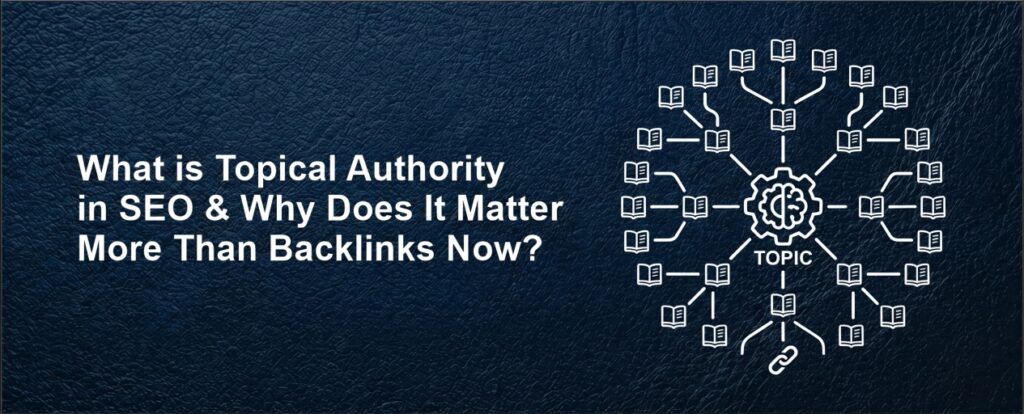
What is Topical Authority in SEO and Why Does It Matter More Than Backlinks Now?

For over a decade, the SEO industry operated under a simple premise: acquire more high-quality backlinks than your competitors, and you will dominate search rankings. Businesses invested thousands in link-building campaigns, guest posting networks, and digital PR strategies, all designed to accumulate those coveted external votes of confidence. In 2026, that playbook no longer guarantees results. Search engines have fundamentally shifted how they evaluate website authority, and backlinks, whilst still relevant, have been eclipsed by a more powerful ranking signal: topical authority. At Enovatorz, we have witnessed this transformation firsthand through our comprehensive SEO services for e-commerce businesses and digital brands. Websites with modest backlink profiles but exceptional topical depth are consistently outranking established competitors who relied primarily on link acquisition. This paradigm shift demands a strategic recalibration for any business serious about sustainable organic visibility. This guide explains what topical authority actually means in modern SEO, why search engines now prioritize it over traditional backlink metrics, and how your business can build topic-based authority that drives long-term rankings and qualified traffic.   Understanding Topical Authority: Beyond Surface-Level Definitions Topical authority represents your website’s perceived expertise and comprehensive coverage of a specific subject area. Rather than measuring how many other sites link to you, it evaluates how thoroughly, accurately, and coherently you address a topic across multiple interconnected pieces of content. Consider two hypothetical websites competing for rankings in the “sustainable fashion” niche: Website A publishes occasional articles about eco-friendly clothing brands, recycled materials, and green fashion trends. Each article exists independently, targeting specific keywords with minimal connection between topics. The site has accumulated 500 backlinks through guest posting and directory submissions. Website B has built a comprehensive knowledge ecosystem around sustainable fashion: detailed guides on fabric sustainability, manufacturing processes, supply chain transparency, consumer education, brand evaluations, impact assessments, certification standards, and industry developments. Articles interlink strategically, creating clear pathways from beginner concepts to advanced insights. The site has only 200 backlinks, mostly earned naturally through citations and references. Google’s own E-E-A-T guidelines confirm that content depth and demonstrated subject knowledge are now core ranking factors.   The Anatomy of Topical Authority Search engines evaluate topical authority through several interconnected signals: Content Depth and Coverage: Does your website address the topic comprehensively across multiple angles, or does it provide shallow, surface-level information? Authority sites answer not just the initial query, but also the follow-up questions users naturally ask as they delve deeper. Semantic Relationships: How well do your articles connect related concepts, entities, and subtopics? Strong topical sites demonstrate understanding of how different aspects of a subject interrelate, using consistent terminology and accurate contextual references. Internal Link Architecture: Are your pages strategically interconnected to guide users through logical learning pathways, or do they exist in isolation? Topic clusters, where pillar content connects to supporting articles through purposeful internal links, send powerful relevance signals. Content Freshness and Maintenance: Do you actively update existing content with new insights, data, and examples, or does information stagnate after publication? Authority decays when accuracy fades, signalling abandonment rather than active expertise. User Engagement Patterns: Do visitors explore multiple related pages on your site, indicating they are finding comprehensive value, or do they immediately bounce back to search? Sustained engagement across topic clusters validates authority claims.   The Fundamental Shift: From Link Power to Topic Expertise The transition from backlink-centric SEO to topical authority reflects search engines’ evolving understanding of relevance and trust. Several technological and behavioural changes drove this transformation. AI and Semantic Understanding Modern search algorithms employ sophisticated natural language processing and entity recognition to understand content meaning, not just keyword matching. Google’s BERT, MUM, and subsequent AI implementations analyse how websites explain concepts, answer questions, and demonstrate subject comprehension. This semantic capability enables search engines to evaluate whether a website genuinely understands a topic or merely mentions relevant terms. Backlinks cannot fake this understanding. Only comprehensive, interconnected content can. Understanding how AI visibility and SEO intersect is essential for any brand navigating today’s search landscape. The Rise of Zero-Click and AI-Generated Search As search interfaces evolve, featuring AI Overviews, featured snippets, knowledge panels, and conversational search experiences, the traditional link-based model becomes less central. Search engines now extract information from authoritative sources to answer queries directly, meaning topic coverage matters more than link accumulation. Link Commoditization and Manipulation As link building became mainstream, the signal’s reliability decreased. According to Search Engine Land, Google’s ongoing algorithm updates have consistently moved toward rewarding genuine expertise over manipulated link signals. User Experience as a Ranking Factor With Core Web Vitals and behaviour metrics increasingly influencing rankings, search engines prioritize content that satisfies user intent completely. Topical authority sites naturally excel at this because users find answers, explore related information, and achieve their goals without needing to leave the domain. Backlinks alone cannot improve user experience. They can drive initial traffic, but sustained engagement requires substance, which topical authority provides. It is also worth noting that social signals in SEO play a growing supporting role in validating content relevance and user satisfaction.   Why Topical Authority Matters More Than Backlinks Now The statement “topical authority matters more than backlinks” does not mean links are irrelevant. Rather, it acknowledges that in 2026’s SEO landscape, link power without topical foundation delivers diminishing returns, whilst topical strength with minimal links consistently produces results. Factor Backlink-Focused Strategy Topical Authority Strategy 2026 Reality Primary Signal Number and quality of external links Depth and coherence of subject coverage Topic depth now outweighs link quantity Time to Results Can be fast with aggressive link building Slower initial build, then compounds rapidly Authority compounds; links plateau Vulnerability to Updates High risk during algorithm changes Resilient across most algorithm shifts Authority-based sites weather updates better Competitive Moat Easily replicated with budget Difficult to replicate without expertise Authority creates durable advantage User Satisfaction Links drive traffic but don’t ensure value Content ecosystem keeps users engaged Engagement metrics increasingly influence rankings AI Search Compatibility Links less relevant for AI-generated answers Content depth critical for AI citations Topic authorities become

What is Topical Authority in SEO and Why Does It Matter More Than Backlinks Now? Read More »

AI Visibility and SEO: Why Brand Presence Matters in 2026

The landscape of search has fundamentally transformed. Traditional SEO tactics that worked just two years ago are rapidly becoming obsolete as artificial intelligence reshapes how people discover, evaluate, and choose brands online. In 2026, visibility isn’t just about ranking on page one of Google. It’s about being present, trusted, and recommended across AI-powered search engines, large language models, voice assistants, and decision-making platforms that users increasingly rely on to navigate an overwhelming digital ecosystem. For businesses, this shift presents both a challenge and an opportunity. Those who adapt their brand presence and SEO strategies for this AI-first internet will capture disproportionate visibility and market share. Those who don’t risk becoming invisible, regardless of how good their products or services actually are.   The Evolution from Search Engines to Decision Engines Search engines have evolved from simple information retrieval systems into sophisticated decision-making platforms. When someone searches today, they’re not just looking for a list of links—they’re looking for answers, comparisons, recommendations, and trustworthy guidance. AI systems now power these decision engines, fundamentally changing how search results are generated and presented. Instead of displaying ten blue links and letting users sort through them, modern search engines synthesize information, compare options, and often provide direct answers without requiring a click to any website. This evolution has created what industry experts call “zero-click searches”—queries where users get their answer directly on the search results page. For businesses, this means traditional metrics like click-through rates and page visits are becoming less reliable indicators of visibility and impact. What matters now is whether your brand appears in these AI-generated summaries, whether you’re cited as a trusted source, and whether AI systems recognize your business as an authority worth recommending.   How AI Systems Evaluate and Recommend Brands Understanding how AI evaluates brands is crucial for modern SEO strategy. Unlike traditional algorithms that primarily focused on keywords and backlinks, AI systems assess brands through a more holistic lens. Evaluation Factor What AI Looks For Impact on Visibility How to Optimize Brand Recognition Consistent mentions across platforms, clear identity High – determines if brand is “known” entity Maintain consistent NAP, messaging, visual identity across all channels Topical Authority Depth of content in specific domain, expertise signals Very High – determines trustworthiness Create comprehensive, interconnected content clusters on core topics Credibility Signals Third-party validation, reviews, citations, mentions High – validates authority claims Build genuine reviews, earn media mentions, establish thought leadership Content Quality Originality, depth, accuracy, helpfulness Very High – determines content value Invest in unique insights, data, research, and expert perspectives User Experience Site speed, mobile optimization, clear navigation Medium – affects recommendation likelihood Optimize technical performance and usability Consistency Uniform messaging, positioning, voice across touchpoints High – reinforces brand identity Develop and follow brand guidelines across all content Contextual Relevance Alignment with user intent and query context Very High – determines matching accuracy Structure content to directly address user needs and questions AI doesn’t just look at individual pages—it builds a comprehensive understanding of your entire brand ecosystem. This holistic evaluation means every piece of content, every mention, every review contributes to or detracts from your overall brand authority in AI systems.   The Rise of Brand-Centric SEO The shift toward brand-centric SEO represents a fundamental change in how businesses need to approach visibility. Traditional SEO focused heavily on technical optimization and keyword targeting. While these elements remain important, they’re no longer sufficient on their own. Modern SEO success requires building a recognizable, trustworthy brand that AI systems can understand and confidently recommend. This means your SEO strategy must integrate with your branding, content marketing, and overall business positioning. This shift doesn’t mean abandoning traditional SEO best practices. Technical optimization, keyword research, and link building still matter. But they must now serve a larger brand-building strategy rather than exist as isolated tactics.   Understanding E-E-A-T in the AI Era Google’s E-E-A-T framework (Experience, Expertise, Authoritativeness, and Trustworthiness) has become increasingly central to SEO success, particularly as AI systems become more sophisticated at evaluating content quality and source credibility. E-E-A-T isn’t just a ranking factor—it’s a framework for how AI systems determine which sources deserve visibility and recommendation. According to Search Engine Journal’s comprehensive guide on E-E-A-T, demonstrating these qualities directly impacts how search engines and AI platforms assess and rank content. Breaking Down E-E-A-T Components: Experience: First-hand knowledge and practical insights that demonstrate real-world involvement with the topic. This is what separates generic content from genuinely valuable guidance. Expertise: Subject matter depth that shows specialized knowledge. This comes from credentials, demonstrated knowledge, and the ability to explain complex topics clearly and accurately. Authoritativeness: Recognition within your industry or niche as a go-to source. This is built through consistent high-quality content, citations from other authoritative sources, and establishing thought leadership. Trustworthiness: Reliability, transparency, and credibility that makes users and AI systems confident in your information. This includes accurate citations, clear sourcing, transparent business practices, and positive reputation signals. Google’s Evaluator Guidelines provide detailed frameworks for how quality and trust are assessed in search results. For businesses, strengthening E-E-A-T requires a comprehensive approach that goes beyond individual content pieces to encompass your entire brand presence and reputation.   AI Traffic Patterns and Brand Visibility Recent research reveals significant insights into how AI-driven traffic differs from traditional search traffic. According to Previsible’s 2025 State of AI Discovery Report, AI referral traffic shows distinct patterns that favor certain types of content and brand touchpoints. AI Traffic Distribution Insights: The data shows that AI traffic is significantly more intent-rich and conversion-oriented than traditional search traffic. Rather than broad informational queries, AI systems direct users to specific pages that match their decision-making needs. This has major implications for content strategy. While traditional SEO might prioritize high-volume informational content to capture top-of-funnel traffic, AI-optimized strategies should focus on authoritative, decision-stage content that helps users make informed choices. ChatGPT alone accounts for approximately 84% of all AI referral traffic, growing more than 3x year over year. This concentration means that optimizing for AI visibility

AI Visibility and SEO: Why Brand Presence Matters in 2026 Read More »