
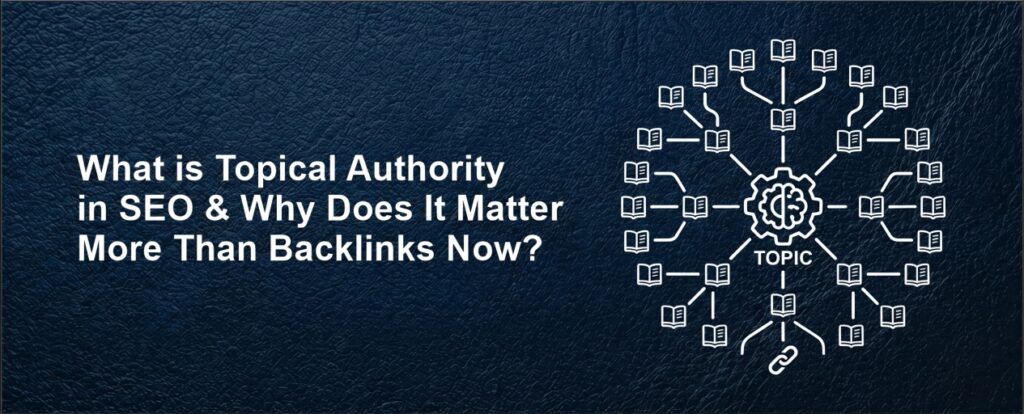
What is Topical Authority in SEO and Why Does It Matter More Than Backlinks Now?
For over a decade, the SEO industry operated under a simple premise: acquire more high-quality backlinks than your competitors, and you will dominate search rankings. Businesses invested thousands in link-building campaigns, guest posting networks, and digital PR strategies, all designed to accumulate those coveted external votes of confidence. In 2026, that playbook no longer guarantees results. Search engines have fundamentally shifted how they evaluate website authority, and backlinks, whilst still relevant, have been eclipsed by a more powerful ranking signal: topical authority. At Enovatorz, we have witnessed this transformation firsthand through our comprehensive SEO services for e-commerce businesses and digital brands. Websites with modest backlink profiles but exceptional topical depth are consistently outranking established competitors who relied primarily on link acquisition. This paradigm shift demands a strategic recalibration for any business serious about sustainable organic visibility. This guide explains what topical authority actually means in modern SEO, why search engines now prioritize it over traditional backlink metrics, and how your business can build topic-based authority that drives long-term rankings and qualified traffic. Understanding Topical Authority: Beyond Surface-Level Definitions Topical authority represents your website’s perceived expertise and comprehensive coverage of a specific subject area. Rather than measuring how many other sites link to you, it evaluates how thoroughly, accurately, and coherently you address a topic across multiple interconnected pieces of content. Consider two hypothetical websites competing for rankings in the “sustainable fashion” niche: Website A publishes occasional articles about eco-friendly clothing brands, recycled materials, and green fashion trends. Each article exists independently, targeting specific keywords with minimal connection between topics. The site has accumulated 500 backlinks through guest posting and directory submissions. Website B has built a comprehensive knowledge ecosystem around sustainable fashion: detailed guides on fabric sustainability, manufacturing processes, supply chain transparency, consumer education, brand evaluations, impact assessments, certification standards, and industry developments. Articles interlink strategically, creating clear pathways from beginner concepts to advanced insights. The site has only 200 backlinks, mostly earned naturally through citations and references. Google’s own E-E-A-T guidelines confirm that content depth and demonstrated subject knowledge are now core ranking factors. The Anatomy of Topical Authority Search engines evaluate topical authority through several interconnected signals: Content Depth and Coverage: Does your website address the topic comprehensively across multiple angles, or does it provide shallow, surface-level information? Authority sites answer not just the initial query, but also the follow-up questions users naturally ask as they delve deeper. Semantic Relationships: How well do your articles connect related concepts, entities, and subtopics? Strong topical sites demonstrate understanding of how different aspects of a subject interrelate, using consistent terminology and accurate contextual references. Internal Link Architecture: Are your pages strategically interconnected to guide users through logical learning pathways, or do they exist in isolation? Topic clusters, where pillar content connects to supporting articles through purposeful internal links, send powerful relevance signals. Content Freshness and Maintenance: Do you actively update existing content with new insights, data, and examples, or does information stagnate after publication? Authority decays when accuracy fades, signalling abandonment rather than active expertise. User Engagement Patterns: Do visitors explore multiple related pages on your site, indicating they are finding comprehensive value, or do they immediately bounce back to search? Sustained engagement across topic clusters validates authority claims. The Fundamental Shift: From Link Power to Topic Expertise The transition from backlink-centric SEO to topical authority reflects search engines’ evolving understanding of relevance and trust. Several technological and behavioural changes drove this transformation. AI and Semantic Understanding Modern search algorithms employ sophisticated natural language processing and entity recognition to understand content meaning, not just keyword matching. Google’s BERT, MUM, and subsequent AI implementations analyse how websites explain concepts, answer questions, and demonstrate subject comprehension. This semantic capability enables search engines to evaluate whether a website genuinely understands a topic or merely mentions relevant terms. Backlinks cannot fake this understanding. Only comprehensive, interconnected content can. Understanding how AI visibility and SEO intersect is essential for any brand navigating today’s search landscape. The Rise of Zero-Click and AI-Generated Search As search interfaces evolve, featuring AI Overviews, featured snippets, knowledge panels, and conversational search experiences, the traditional link-based model becomes less central. Search engines now extract information from authoritative sources to answer queries directly, meaning topic coverage matters more than link accumulation. Link Commoditization and Manipulation As link building became mainstream, the signal’s reliability decreased. According to Search Engine Land, Google’s ongoing algorithm updates have consistently moved toward rewarding genuine expertise over manipulated link signals. User Experience as a Ranking Factor With Core Web Vitals and behaviour metrics increasingly influencing rankings, search engines prioritize content that satisfies user intent completely. Topical authority sites naturally excel at this because users find answers, explore related information, and achieve their goals without needing to leave the domain. Backlinks alone cannot improve user experience. They can drive initial traffic, but sustained engagement requires substance, which topical authority provides. It is also worth noting that social signals in SEO play a growing supporting role in validating content relevance and user satisfaction. Why Topical Authority Matters More Than Backlinks Now The statement “topical authority matters more than backlinks” does not mean links are irrelevant. Rather, it acknowledges that in 2026’s SEO landscape, link power without topical foundation delivers diminishing returns, whilst topical strength with minimal links consistently produces results. Factor Backlink-Focused Strategy Topical Authority Strategy 2026 Reality Primary Signal Number and quality of external links Depth and coherence of subject coverage Topic depth now outweighs link quantity Time to Results Can be fast with aggressive link building Slower initial build, then compounds rapidly Authority compounds; links plateau Vulnerability to Updates High risk during algorithm changes Resilient across most algorithm shifts Authority-based sites weather updates better Competitive Moat Easily replicated with budget Difficult to replicate without expertise Authority creates durable advantage User Satisfaction Links drive traffic but don’t ensure value Content ecosystem keeps users engaged Engagement metrics increasingly influence rankings AI Search Compatibility Links less relevant for AI-generated answers Content depth critical for AI citations Topic authorities become
What is Topical Authority in SEO and Why Does It Matter More Than Backlinks Now? Read More »
